- Valen's Newsletter
- Posts
- Love, Money & Purpose: 8 Principles To Your Dream Life.
Love, Money & Purpose: 8 Principles To Your Dream Life.
Character Analysis: Charlie Bartlett

Valen Biasi
December 29, 2023

“In general, the Nice Guys I have worked with do not report having had a close, bonded relationship with their fathers in childhood … Women inherited the defacto job of turning boys into men. Unfortunately even the most well-meaning mothers are not equipped to teach their sons how to be men by themselves.” — Dr. Robert Glover
On a stage, in front of an American football stadium, completely packed with people.
Charlie: Thank you!
How you all doing tonight?
It's great to see all of you here.
My name is Charlie Bartlett!

Crowd: Charlie! Charlie! Charlie!
Charlie Bartlett, high-school kid. He’s a troublemaker, and a big dreamer.
Someone is saying “Charlie! Charlie! Charlie!” but to call him to the principal’s office.
It was a daydream.
He is getting expelled from yet another private school because he was making and selling fake driver's licenses.
Mom: just can't fathom why you did it. It's not like you needed the money.
I mean, really, Charlie, what would your father say if he were here?

**Charlie: Mom, they were just starting to appreciate me.**
You know, I was the guy that everyone wanted to meet.

Mom: Well, maybe there's more to high school than being well liked.

Charlie: Like what, specifically?

**Mom: Nothing comes to mind.**
He is willing to go to great lengths for the sake of approval. Just like you or me.
Now he’ll be heading towards a public school, getting out of his comfort zone.
He lives with her mother, whom he has to take care of.
Charlie: Have you taken your Klonopin today?

Mom: I haven't. Where do you suppose I put that?

Charlie: Probably in your purse.
It’s weird because Charlie starts with nothing. If he didn’t fit in in private schools, in the public school he fit less than an elephant inside a pocket.
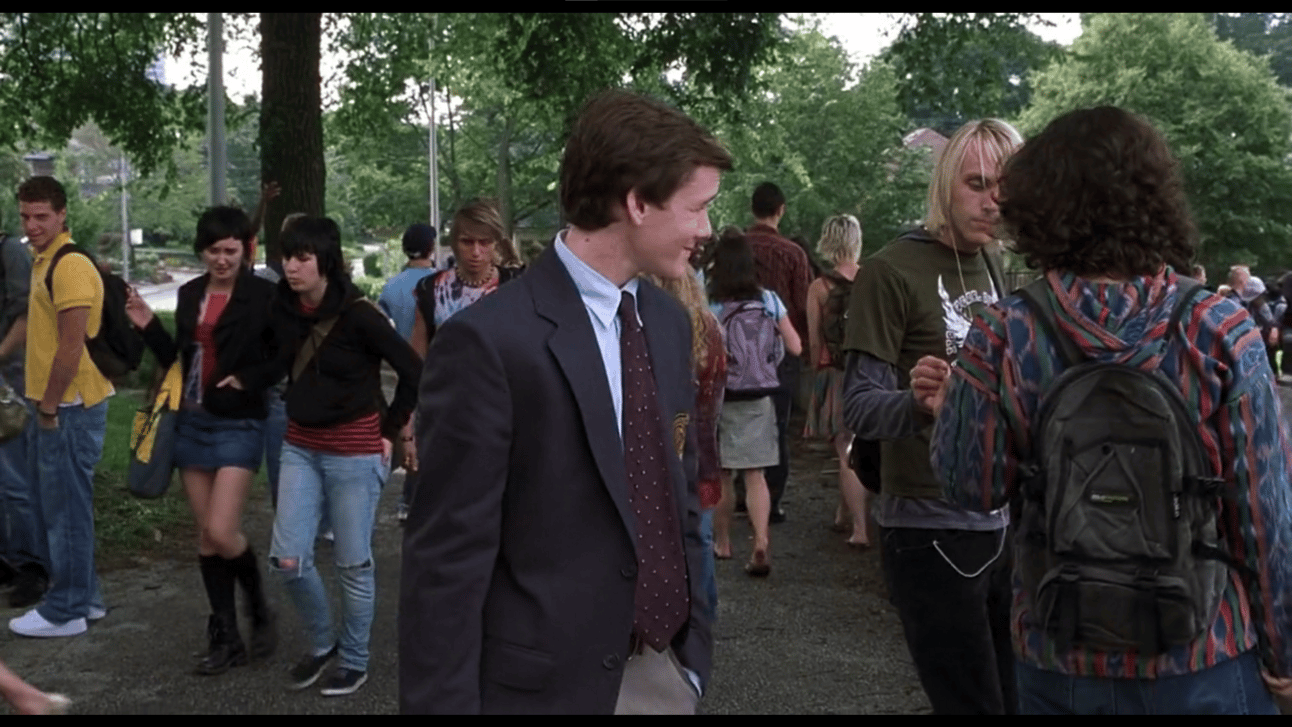
As it happened to me in the past, he just made friends with the “weirdos”.
He was a weirdo too by his school’s standards anyway.
He tries to make friends but gets ignored. He repels people (and gets beaten).
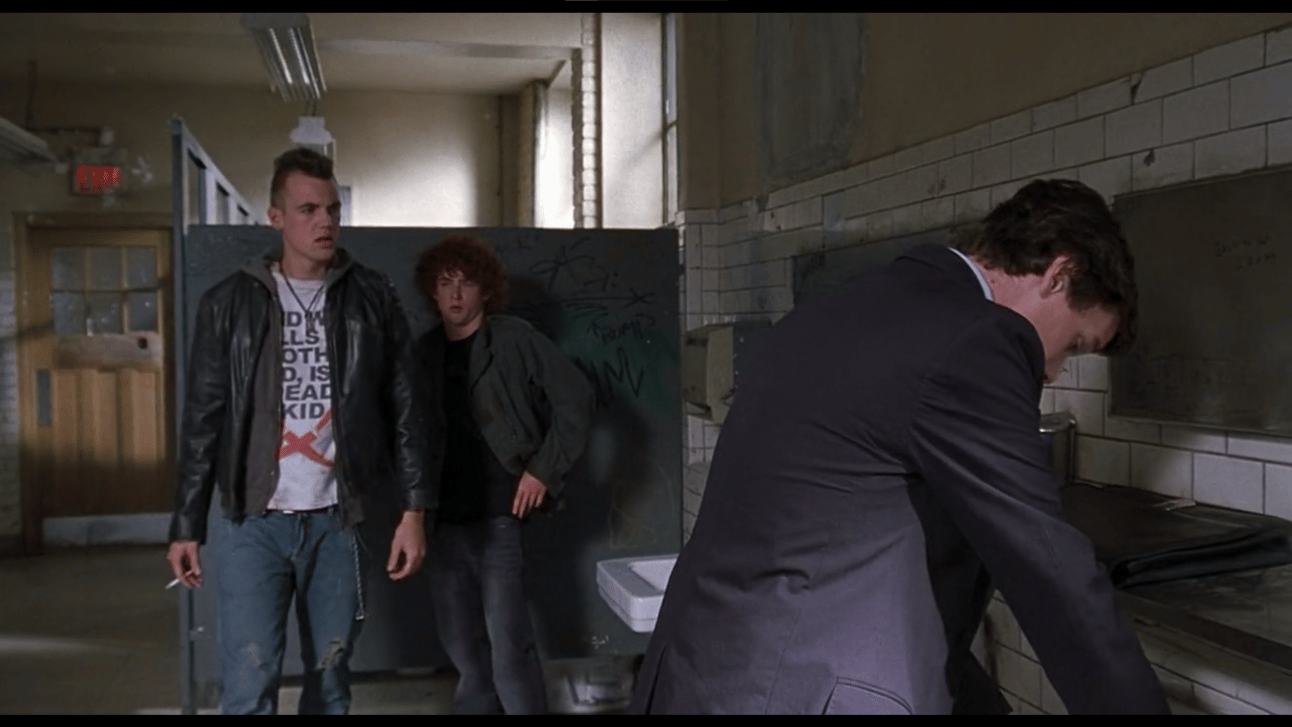
The thing is, Charlie will undergo a personal transformation that will lead to becoming the most popular kid in the school, getting the girl, and finding and living according to his life’s purpose.
I’ve broken down exactly how he does this, dragging from powerful psychological principles that made it work for him, and will make it work for you by acting on them.
It’s also a guide for myself given I also want the girl, the validation, and most important of all: living a purposeful life. I’m inspired by Charlie and want to be more like him.
These are the 8 life-changing principles Charlie Bartlett lives by to get to his dream life.
Stick until the end, it becomes better and better as we dig deeper and deeper into Charlie’s personal transformation:
1. Develop the being yourself muscle.
Charlie is HIMSELF. A lot.
We’re going to see throughout this entire article the different ways in which he does this.
I know what you’re thinking.
I said it was going to be no BS so this is exactly what I mean:
Being yourself:
Asking yourself what you really want and then pursuing it.
Asking yourself what you really think about something and then saying it.
As simple as that.
Yet in our everyday lives, we miss this.
We usually don’t pay much attention to what we REALLY want, let alone pursue it.
It’s also rare to say what you REALLY think about something or someone.
If you did, you’d be like Charlie, and after some trials and tribulations, you’d have the life you want.
What gets in the way? Fear.
When I was a kid I loved sports, yet I was terrible at them, especially team sports.
Why? I had fear: of letting people down, of being screamed at or judged for losing the ball, of people getting angry at me for playing hard and physically, of injuring myself.
It was all FEAR.
Fear prevented me from being myself, enjoying the game, and trying to win.
I was just trying not to screw up. Guess what, that’s a losing game plan, you and I know this.
It wasn’t until my anger towards some of my classmates’ bullies grew enough to PLAY HARD and seeing that life continued anyway, that I started enjoying it more, improving, and being an annoyance to those classmates who were up against me, and someone worth choosing to those who picked me.
I didn’t become a beast, fear still got a part of me (and it still does) but I’ve been improving and enjoying the game way more ever since. This has been true for me not only in sports but in every area of my life: public speaking, cold approaching, social skills, sales.
Every time you feel the fear and do it anyway, you strengthen your being yourself muscle in that area.
It’s like bicep curls for your mind.
The lesson: Find reasons to do it, those reasons can lead to emotions like anger, or they can lead to excitement, or a mix of both.
In my case, it was partly the bullying and partly the desire to enjoy it, become good at it, and be respected.
Then JUST DO IT. Do it despite the fear.
In seeing you’re still alive and your worst nightmares (which prevented you from acting before) don’t happen, acting aligned with who you really are will become more and more easily in that area of your life.
Yet it’s hard to change when everyone around you, including your friends, expects you to act as you always did, which brings us to the next point:
2. Get into a NEW environment
Charlie was used to being in private schools his whole life.
A public school is a jump for him, he doesn’t fit in AT ALL.
He has a very tough time at the beginning, so much that he starts being less of himself to avoid getting kicked his ass off.
He doesn’t remain in this position for long because he developed his being yourself muscle before.
In my own life, it was in facing new environments where I felt the most free to be myself, to change my shyness habits for those that got me what I really wanted: connection and (like Charlie) admiration.
The same happened for an author and content creator who through his content, and especially his book, has been a mentor of mine: Charlie Houpert (yes, another Charlie).
After being voted as one of the shyest guys in his senior year of high school, it wasn’t until he got into an exchange program to Puerto Rico (he was from the US) where he knew no one from the school was going for the sole purpose of beating his shyness.
That’s quite a jump, even larger than the one from Bartlett.
And hell that it worked.
He’s been teaching charisma for years now and I’m pretty sure he’s already a millionaire thanks to it.
Houpert made his biggest problem his biggest strength, which brings us to the next point…
3. Use your PROBLEMS as an INSPIRATION, not a liability
Charlie faces psychological trouble: He cannot forgive his dad for getting arrested and he doesn’t have any role model in his life.
Not to mention he’s quite far from his dream: lonely and willing to lose who he really is for the sake of validation.
He is at the bottom of the popularity contest he declares to be the most important thing.
What do you do with your stuff? Usually nothing but pack it inside.
He faces his problems, he goes to a psychiatrist and starts working on them, and the struggles he faces are the basis for the messages he will give to his clients and on his speeches.
He’s able to empathize with others because he went through the same: feeling like he didn’t belong and that he won’t achieve his dream.
When you change your perspective by seeing your problems as gifts instead of liabilities you begin to be grateful for what you have and get your ideas on how to use them to your advantage.
Charlie’s own problems give him the idea for his next project… becoming the school’s psychiatrist (yes, drugs included).
Which brings us to the next point:
4. Start a PROJECT
“It’s not until you start a project that you’re actually learning and making an impact on the world. You cannot get recognition without having an impact.”
Charlie Bartlett starts a PROJECT. He gets into real action.
He starts by selling the medication he’s on (given by his psychiatrist) at a party which gets him pretty famous, but quickly pivots into the full experience: a psychiatrist's office in the men’s bathroom.
Finally, as he matures, he finishes the drugs and ends up giving counseling for free (more on this at the end, but see how this relates to the quote)
“You cannot get recognition without having an impact.”
It’s not about the money or the popularity. It’s the impact that he’s making.
You attract what you express.
When he realizes drugs are not having a positive impact in people (in fact they’re having too much of a negative one) he stops giving them. He even stops charging for the counseling sessions.
He just focuses on giving value, becoming high-value himself in the process.
How can you do this? Here’s a quick breakdown:
Mastering a skill, and turning it into a business (this is what Charlie finally does, his skill is coaching/counseling).
It could be pretty much any skill:
Coaching
Web Design
Graphic Design
Video Editing
Translation
Social Media Marketing
Music (learning an instrument, production, singing)
Sports
Content Creation (blog, YT channel, other social media platforms)
Writing (poetry, screenplay, fiction, copywriting, articles)
You could monetize any of these skills, simple ways would be to do freelance and/or to become a teacher.
But how do you start? Doing projects for free.
This can be personal projects, or offering your services for free for people/businesses who may need it.
It’s in this way that you’ll achieve mastery, which brings us to the next point.
5. Develop MASTERY
“Only sticking with it, you win with it. If you lose your torch, it’ll never turn into a fire."
Charlie Bartlett develops mastery as a counselor and as a public speaker.
The hard thing about mastery is resilience.
It’s hard to stay in the game across time, and it takes courage and constant investment of your time, money, and energy to keep improving regularly, to keep learning new things, to try new techniques, and new and better ways of doing things, to figure out how to achieve more by doing less.
Mastery is a long road yet a very fulfilling one, it’s only in mastery where we can make our greatest contribution to the world.
You cannot change the world (by which I mean, having a considerable impact on hundreds of thousands of people) with 5 years of study or work, it takes at least a decade to be in a good position to do so nowadays thanks to social media, but usually, it took (and a lot of the times still takes) much more.
Now, how do you find something you can stick to over so much time?
You find it through your interests:
What do you love doing?
What do educate yourself in online?
What do you love talking about?
This is where your interests lie.
When you start a project it must be in the area of your interests.
If you have a dream, you could also work backward from it: Charlie had the dream of motivating thousands of people with his speech, and he started motivating one person at a time with his counseling practice.
There is one more powerful thing about pursuing mastery:
Mastery requires sacrifices, and sacrifices build character, they build who you are.
Remember:
“The work works on you more than you work with it” — Alex Hormozi
This is what Charlie had to do to develop mastery as a counselor, for example:
Saying what people NEED to hear, not what they WANT to hear.
Counseling session with her crush, Susan:
Charlie: All right. Well, I guess the obvious one is how do you feel about your dad?

... [Susan talks about his dad but avoids the question regarding her FEELINGS]

Charlie: Susan.

Susan: Yes?

**Charlie: I'm still waiting for you to tell me how you feel about your dad.**

Susan: Ah. **You're tough.**
To develop mastery you need to let go of wanting every single person’s validation.
You need to accept you’re not for everyone.
The people that like you for you, you will attract. The people who don’t you will repel.
The funny thing is, many more people will be attracted to who you really are compared to the mask you’ve been wearing, which is what most people do because they feel they need to fit in.
Dropping the mask generates admiration in the right people because they know the courage it would take for them to do so.
6. INVITE people to the fun. Become the HOST.
“Only when you become an initiator you can become a respected leader.”
Charlie Bartlett INVITES people to the fun. He interacts with people, he becomes a leader.
Becoming an initiator is the path to becoming a leader in your space or community.
He becomes the initiator in seeking a business partner, in hosting a party, in starting the “psychiatrist” project.
This is what Hamza (one of my mentors) did and what I applied my life (and worked):
In this quick short, Hamza explains the concept. Below, is how I applied it concepts and the results I got with it.
In the Hamza Argentina Discord group, I became an initiator prompting people to make our first in-person meetup. We were the 2nd/3rd country in the world to do one.
I was also the initiator of weekly accountability calls, which served me a lot throughout this whole year.
In my first (and for now, only) in-person semester of college, I initiated a fitness club, where I met my best friend from college, Federico, with whom we would go to work at the calisthenics park and then for Starbucks and have exceptional conversations multiple times a week, before or after class.
It was awesome, and those are memories I still cherish to this day.
The “pick-up line”: “Hey! Do you want to do some pushups?”
I just said that to him in the university park.
I said it to multiple people but he was the first one to say yes, and I think with THAT phrase, the only one. AND he ended up being the only one with whom we actually went to the park.
This is to say, it doesn’t matter what you say, the point is being bold.
Confidence isn’t needed, I was still nervous when I invited people, but trying means boldness already.
Some people made fun (maybe behind my back) of me? Probably.
Was it worth it? Absolutely.
I was doing something unusual, which is being an initiator, I don’t blame them.
But this is the lesson:
By being an initiator you’ll attract the right people into your life.
I also got to know some girls (even if they said NO to joining the fitness club, another example of not taking rejection personally).
I became very social (something I’ve been working on for around 5 years, and also achieved at the end of high school) around the whole campus and made other friends too.
It was awesome.
This IS how you stop being lonely, being low in the “social hierarchy”, and having no one, let alone girls, to talk to.
The superpower of this skill is that you will be able to make friends and become a leader in ANY context.
This happened to me on the holidays of that same year:
I ended up kissing a girl I met on the beach.
How? I just asked to join her on the volleyball, the rest is history: a degree of luck (we met again the next day, by chance) and a degree of boldness (I ended up going first for the kiss).
It’s funny, because by being an initiator you CREATE your luck.
The more you initiate the more you’ll find those awesome guys or girls to befriend, do business with, or date. Just “BY CHANCE”.
The last and most important story of me as an initiator:
I'm reading the No More Mr. Nice Guy book.
The first activity is to look for safe people with whom you could share your journey of recovery (from being a Nice Guy for almost all your life).
I doubted whether to do it or not for quite a while, but knew if I didn’t do the first activity, I wouldn’t do any nor take the book seriously, I wouldn’t change my life.
I wrote to my father and my closest friend at the time.
They not only supported me but followed my lead and started reading the book alongside me.
We would get together every week for almost a year, to discuss the topics of the book, plan how many activities we needed to get done for the next week (usually 1 or 2), and the next week share how they went.
If I have to define my biggest source of personal transformation, it’s this experience, thanks to this book.
But even more importantly, thanks to being an initiator.
Lesson: Become an initiator. Like I did with the fitness club, you can use your project as the excuse.
7. Take RISKS
“To have the life you want you really want, by definition, to change your life. That’s impossible to do without taking risks.”
Charlie is doing public speeches, he’s inviting his crush on a date, going for the first kiss, and saying what people need to hear, not what they want to hear.
Charlie takes risks all the time.
He gets into trouble because of this, sometimes he gets misinterpreted, but he does this anyway.
I don’t see an honorable way to life where you’re not being yourself: staying true to your values and purpose.
That requires saying no to everything that’s not aligned with it.
Sure, I don’t think anyone is perfect in this, definitely not me, but there is power in aligning yourself as much as possible, to make as many decisions according to it.
The more you do so the more you feed that fire within, the fire of the real you, of your destiny, of the reason why you’re here, of your dharma, the Hindu word for purpose.
“Dharma means, variously, “path,” “teaching,” or “law.” For our purposes in this book it will mean primarily “vocation,” or “sacred duty.” It means, most of all—and in all cases—truth.” — Steven Cope (from ‘The Great Work of Your Life’)
It’s the path you need to follow, the divine path that’s unique to YOU. And is the path of your true self.
As Krishna (a Hindu god) puts it: “Strive constantly to serve the welfare of the world; by devotion to selfless work one attains the supreme goal of life. Do your work with the welfare of others always in mind.”
In terms of socializing it’s the same: you need polarization to have connection.
You’re not for everyone, and not everyone is for you.
You need to find those matches not only in dating but in every type of relationship.
That requires vulnerability: being yourself before you’re sure it’s “safe” (free from judgment) to do so.
It’s easy to hear “I like Twenty One Pilots” and respond “Oh, me too.”
That’s when you know you’ll be free from judgment.
It’s harder to say with excitement (the same excitement you feel inside) “I watched this movie tonight called Charlie Bartlett…” when you don’t if the other person even likes those kinds of movies or even if he/she likes you.
That’s the challenge and also the reward.
It’s hard, and that’s why few people do it.
There is a respect for doing hard things, which is why this is so relevant to becoming a leader.
This is what the most world-renowned leadership expert of our times has to say about this: “Leadership is the willingness to put oneself at risk.” — John C. Maxwell
I’m an entrepreneur. I’m a risk taker. I’ve developed this habit first in my social life (where I’m still developing it and growing it even more) and now in business.
It’s invaluable.
I wouldn’t be even writing this if it weren’t for my risk-taking, I’d have taken a crazy job offer I got to work remotely on Machine Learning.
I would be making 15x what I’m doing on my part-time job (with 10x the hours) but I prefer the freedom, the path of entrepreneurship, the straightest path to my dharma.
8. Take LIFE’S HITS and learn from them.
“To suffer terribly and to know yourself as the cause: that is Hell.” — Jordan B Peterson
Charlie finds the greatest lessons at his lowest point, he finds his mentor at the lowest point of his project when one kid (Kip) overdoses with the “prescription” he gave him, trying to kill himself.
The kid ends up in the hospital and Charlie is in real trouble.
The head of the school (Gardner) confronts him. Hard.
This is just the final piece of it:
Gardner: Charlie, come on. What are you doing this for?

Charlie: I don't know. I guess... I'm really happy here.
For the first time, everybody likes me.

Gardner: There are more important things.

Charlie: Look, I know. Everybody keeps saying that, but the thing is, is I'm 17, and popularity is pretty damn important to me.

Gardner: Charlie, there are more important things.

**Charlie: Like what?**

**Gardner: Like what you do with that popularity.**
Look, I've been around a while, you know, long enough to say this.
**What you do in this life matters.**
Gardner is not perfect, he’s an alcoholic and has threatened to kill himself while arguing with his wife, and in front of his daughter.
Yet Gardner gives him wise advice. And for the first time, Charlie listens to him.
And from that point, Gardner becomes a role model for him, and thanks to him he ends up forgiving his father, which makes him mature even more.
After this conversation, Charlie undergoes a personal transformation and he starts by embracing his dharma:
He goes to visit Kip to keep him company, then throws away all the drugs he hadn’t yet sold, changing to just a free counseling session offer (which still becomes packed).
It’s in our lowest points, where we feel the most vulnerable, where we realize that what we’ve been doing in the past didn’t work.
It’s the humility they give you what makes them the point of most growth.
It’s, in some way, your fault that this happened, and it’s your responsibility to solve this.
You learned something didn’t work, you look for answers.
And you find them: you find mentors. A book, a video, an article, a person close to you.
And you’re open enough to listen to them.
Not because you like the message, you’re being judged after all. You’re being asked to change your ways.
You listen because you NEED it, to get out of the piece of hell you are sitting on.
Lesson: Be bold: you’ll get hit by life. And that’s when you’ll learn the most, when you will mature as a person, when you’ll develop character.
And I leave you with this quote from Jung which can be found in Jordan Peterson’s book, 12 Rules for Life:
“No tree, it is said, can grow to heaven unless its roots reach down to hell.” ― Carl Jung
Hope you start implementing some of this, start a project, or pump up the one you already have. And that you watch the movie, both the film and the soundtrack are priceless.
I can tell because I watched it twice myself, the second taking notes the whole time to prepare this article.
Respecting the soundtrack, I got the lyrics from 2 of the songs in my note-taking app on the phone, one of which I’ve been singing almost daily. They’re inspiring.
Also, let me know your thoughts regarding the article in the comment section, I’d love to read them.
See you next week to dig deeper into the concept of dharma
Reply